
 Written in Partnership with Amir Bakian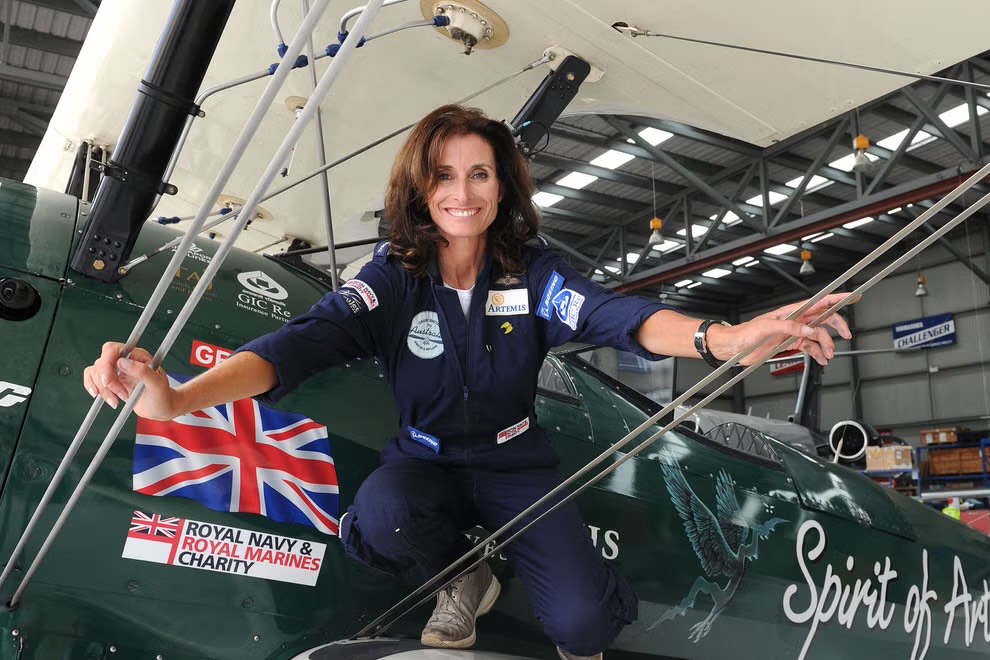
Tracey Curtis- Taylor does not shy away from a challenge, she continues to stand as a beacon of inspiration in the aviation industry. Inspired by early female aviators, Tracey has undertaken several notable flights, including a journey in a 1942 Boeing Stearman Bi Plane from Cape Town, South Africa to Goodwood, UK and from the UK to Australia retracing the historic flight paths that inspired her to become a pilot. Her journey which is vividly depicted in her book “Bird” , is making its way to the screens and upcoming documentary which aims to pay homage to those fearless female pioneers of aviation, much like her flights which are often intended to promote the legacy of pioneering women in aviation and to inspire future generations.
Before exploring Tracey’s adventures, it’s important to appreciate the women aviators who paved the way. These women, like Amelia Earhart and Bessie Coleman, who was the first African American woman to earn a pilot’s license, broke through many barriers. Curtis Taylor credits them for igniting her love for flying and breaking the glass ceiling when it comes to women in the aviation industry.“I’ve been fascinated by flying for as long as I can remember,” Tracey shares, her eyes lighting up with the vivid memories of her youth. “Growing up, I’d spend countless hours just lying on the back lawn, watching planes cut across the sky, imagining myself in the pilot’s seat, navigating through the clouds.” Their courage has shown the world that the sky is open to all, regardless of gender. These pioneers left a profound legacy that continues to inspire many, including like Tracey. Her passion for flying started in her childhood in a small Midwest town, where the open sky was a canvas of possibilities.
Despite facing skepticism about her dreams of flying, Tracey’s determination never wavered. After earning her pilot’s license, she diligently worked to sharpen her flying skills, with an ultimate goal in sight—to pilot commercial airliners.“The journey was filled with ups and downs,” Tracey reflects, her voice conveying a mix of resolve and nostalgia. “There were moments of self-doubt, times when the obstacles seemed too great. But giving up was never an option for me. My dream was clear, and I knew I had the strength and skill to achieve it.” Her dedication led to a breakthrough when she landed a job as a co-pilot with a regional airline. This role was just the beginning as she continued to excel, eventually becoming a captain and leading her crew through the skies.
“Taking the lead in the cockpit for the first time was more than just an achievement; it was exhilarating,” Tracey recounts, her tone filled with pride. “It was a milestone for me personally, but it also stood for every woman who has ever looked skyward and dared to dream of flying.” Now, as Tracey reflects on her journey, she emphasizes the importance of role models in aviation and advocates for continued efforts to promote diversity within the field, consequently becoming a role model herself.
“We have come a long way in making aviation more inclusive, but the journey isn’t over,” Tracey points out, her gaze firm and thoughtful. “It’s vital that we keep pushing for diversity and supporting women in aviation. Every step forward is a step towards a future where the sky holds no limits for anyone.” When asked what advice she has for anyone who has the dream of becoming a pilot she states, “To those dreaming of flight, hold onto your belief in yourself, chase your dreams with relentless energy, and never let anyone put limits on what you can achieve,” Tracey advises earnestly. “The sky truly can be your playground, as long as you have the courage to chase those dreams.”
Advertising disclosure: We may receive compensation for some of the links in our stories. Thank you for supporting LA Weekly and our advertisers.